
Houston Freestanding ER Landscape: Opportunity in America’s Fourth-Largest City
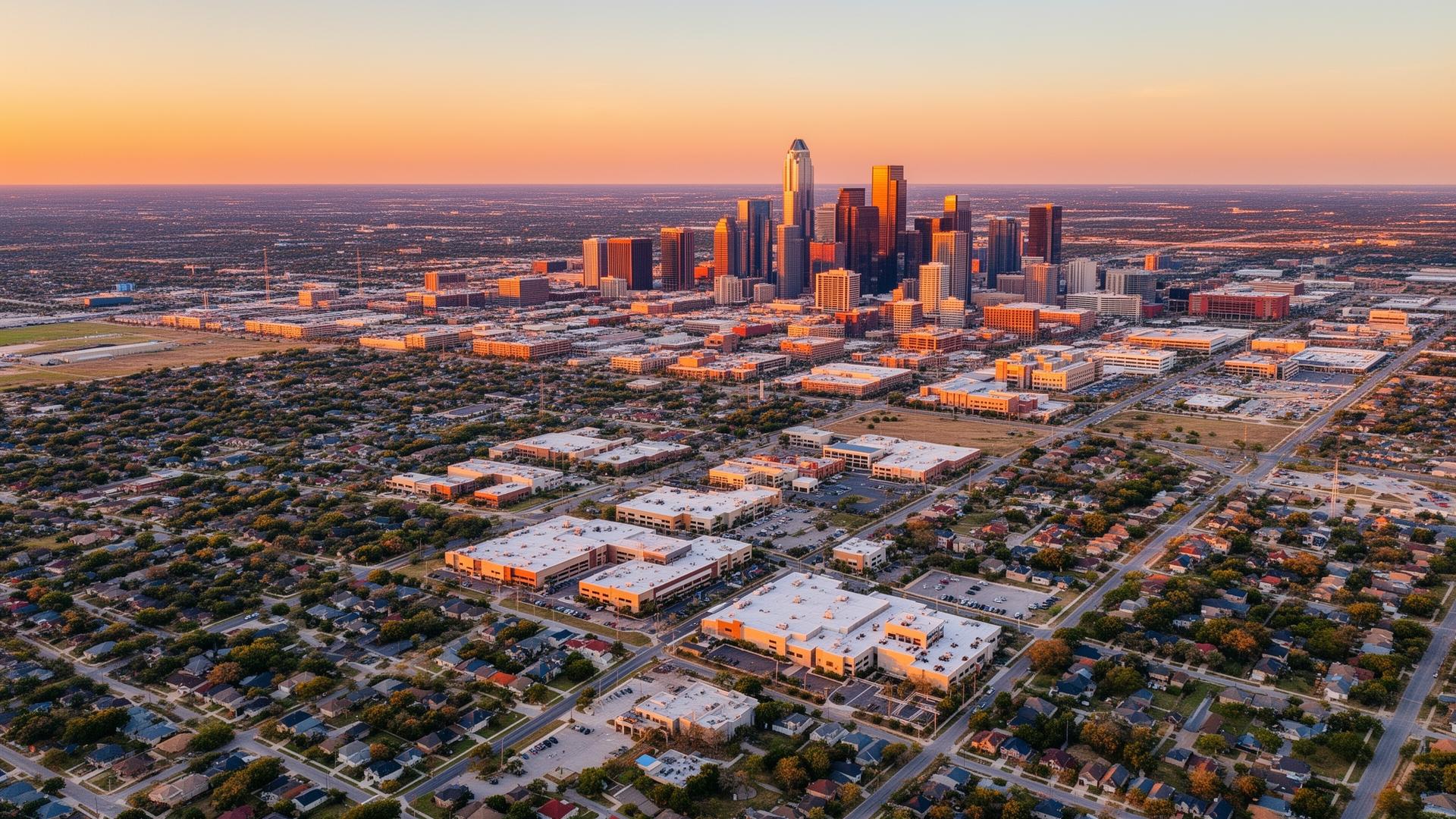
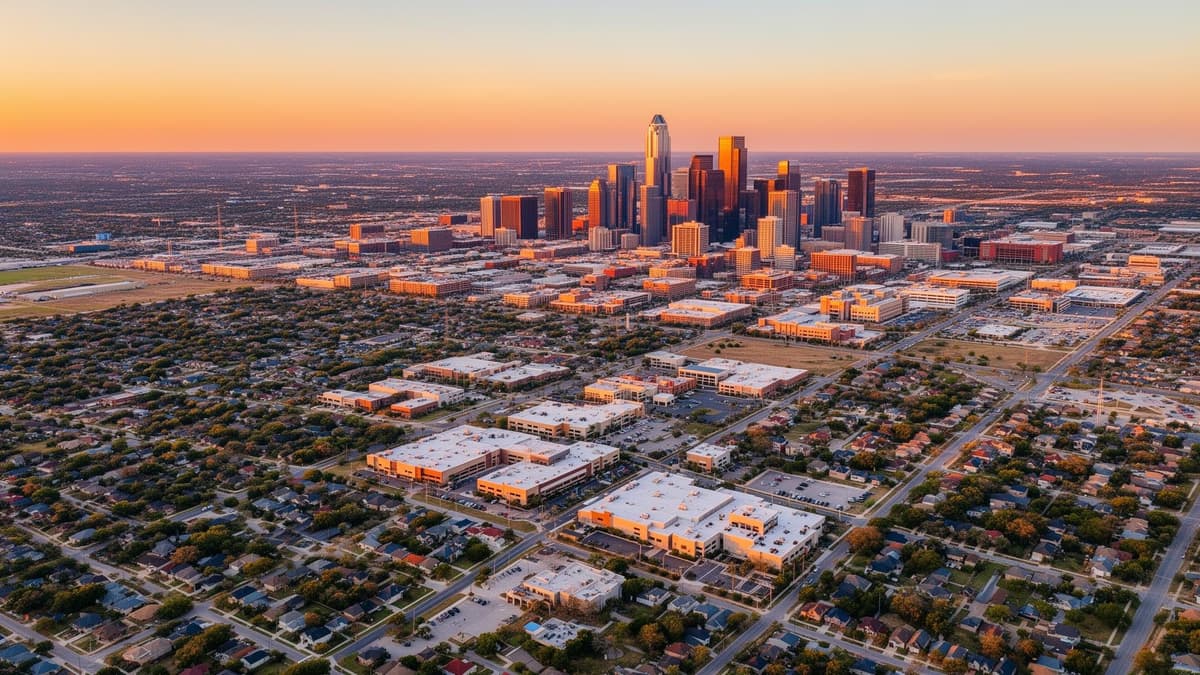
Greater Houston is a healthcare market of extraordinary scale. With more than seven million residents spread across a metropolitan area larger than the state of New Jersey, Houston combines massive population density with sprawling suburban expansion in a way that consistently outstrips the capacity of traditional hospital emergency departments. For healthcare infrastructure operators and investors, Houston represents one of the deepest and most durable demand environments for freestanding emergency rooms in the country.
This analysis examines Houston's demographic drivers, the competitive FSER landscape, payer-mix considerations, and the strategic rationale for continued investment in the region.
Metro Demographics: Scale Meets Sprawl
The Houston–The Woodlands–Sugar Land metropolitan statistical area is home to approximately 7.3 million people, making it the fifth-largest metro in the United States. Houston's growth engine is powered by a diversified economy anchored in energy, healthcare, aerospace, manufacturing, and an increasingly significant technology sector. Between 2020 and 2025, the metro added roughly 120,000 new residents annually — a pace that ranks among the top three metros nationally in absolute growth.
What makes Houston particularly relevant for FSER development is the spatial distribution of this growth. Houston's metro footprint is vast — spanning over 10,000 square miles — and new residential development pushes further from the urban core with each passing year. Western corridors including Katy, Cypress, Fulshear, and Brookshire have experienced explosive growth, with master-planned communities like Cross Creek Ranch, Bridgeland, and Towne Lake adding thousands of homes annually. Northern corridors toward The Woodlands, Tomball, and Magnolia show similar momentum. Southern expansion toward Pearland, Manvel, and Iowa Colony rounds out the picture.
In each of these corridors, residential construction has dramatically outpaced healthcare infrastructure development. Families moving into new neighbourhoods must drive 20–30 minutes to reach the nearest hospital emergency department — a gap that freestanding ERs are purpose-built to address.
Hospital ER Overcrowding: A Persistent Challenge
Houston is home to the Texas Medical Centre — the largest medical complex in the world — along with major hospital systems including Memorial Hermann, Houston Methodist, HCA Houston, and CHI St. Luke's. Despite this concentration of institutional healthcare capacity, hospital emergency departments across the metro are consistently overcrowded.
Average wait times at Houston hospital ERs frequently exceed four hours. Memorial Hermann's busiest campuses report average ER boarding times that stretch into five-to-six-hour territory during peak periods. The fundamental problem is structural: hospital ER construction cannot keep pace with suburban population growth. Building a new hospital campus in Houston requires $400–600 million in capital and four to six years of planning and construction. Meanwhile, 120,000 new residents arrive each year expecting immediate access to emergency care.
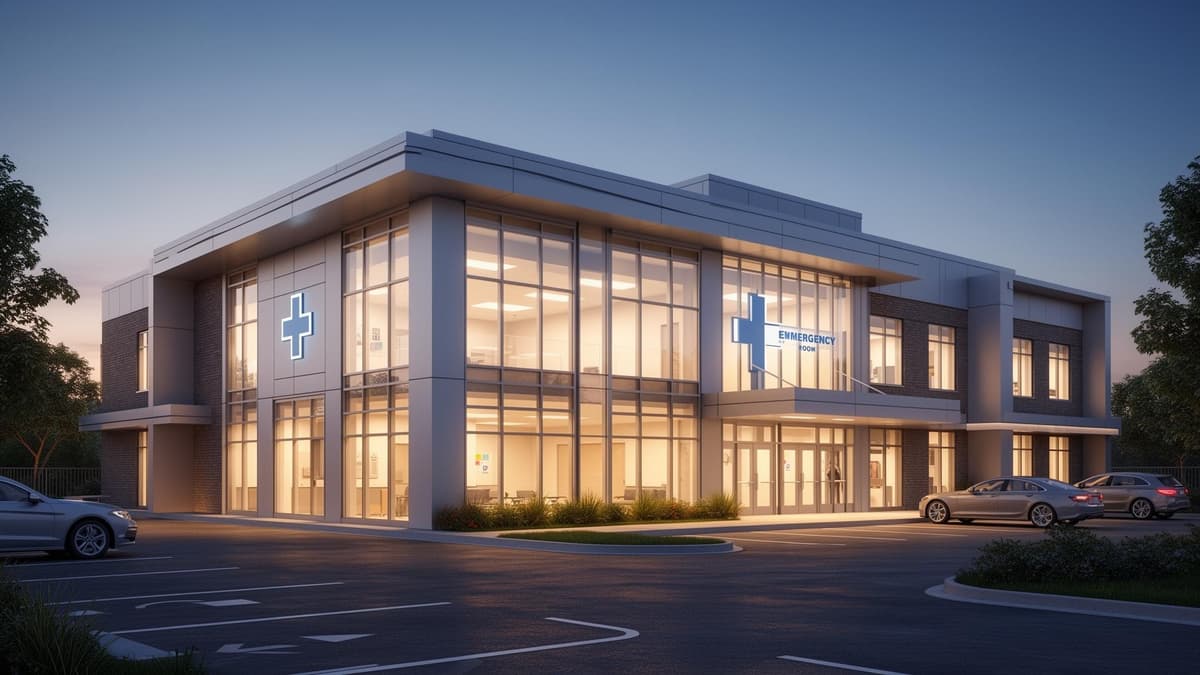
Freestanding ERs offer a faster, more capital-efficient response. A well-planned FSER can be open and treating patients within four to six months of site acquisition, at a fraction of the capital required for a hospital emergency department. As explored in our analysis of Texas's FSER market dynamics, this speed-to-market advantage is particularly powerful in fast-growing suburban corridors.
Energy Corridor and Western Expansion
Houston's western corridor deserves particular attention. The Energy Corridor — stretching along I-10 from the Galleria area westward through Memorial, Barker Cypress, and into Katy — is one of the most economically productive corridors in the state. Major employers including BP, ConocoPhillips, Shell, and dozens of midstream and oilfield-service companies maintain large campuses here, creating a significant daytime population that supplements the residential base.
Further west, Katy has emerged as one of Houston's most desirable suburban markets. The city's population has grown from approximately 16,000 in 2010 to over 25,000 today, but the greater Katy area — including unincorporated Harris and Fort Bend counties — encompasses well over 400,000 residents. Master-planned communities including Cinco Ranch, Elyson, Cane Island, and Jordan Ranch continue to add rooftops at a rapid pace.
Beyond Katy, Fulshear and Brookshire represent the next frontier of western Houston expansion. Fulshear's population has more than tripled in the past decade, and the city is projected to exceed 50,000 residents by 2030. Healthcare infrastructure in these communities remains sparse, creating clear demand for freestanding emergency care.
Payer-Mix Considerations
Houston's payer-mix dynamics are more complex than DFW's. The metro has a larger uninsured population — driven in part by the energy sector's reliance on contract labour and the agricultural workforce in outlying counties — and Medicaid penetration is higher in certain zip codes. However, the suburban corridors that represent the strongest FSER opportunities feature payer profiles comparable to DFW's best markets.
Key payer-mix observations for Houston FSER development:
- Western corridors (Katy, Cypress, Fulshear): Median household incomes exceed $100,000 in most master-planned communities. Commercial insurance penetration is high, driven by corporate employment in the Energy Corridor and the broader professional-services economy.
- Northern corridors (The Woodlands, Tomball, Magnolia): Similarly strong commercial insurance profiles, with The Woodlands consistently ranking among the highest-income communities in the metro.
- Southern corridors (Pearland, Manvel): Solid commercial insurance base with some Medicaid exposure. Per-visit economics remain favourable due to moderate self-pay volumes and strong insurer network participation.
- Inner-loop and near-loop markets: More heterogeneous payer mix with higher self-pay and Medicaid volumes. These markets require more careful financial modelling but can be viable with the right location, volume, and operational discipline.
Operators who invest in robust revenue-cycle management and maintain active network participation with BCBS, Aetna, UnitedHealthcare, and Cigna position themselves well to capture favourable reimbursement across Houston's diverse payer landscape.
Competitive Landscape
Houston's FSER market is mature but not saturated. The metro hosts approximately 100 licensed freestanding ERs, with concentrations in established suburbs and notable gaps in newer growth corridors. The 2019–2022 consolidation cycle removed several undercapitalised operators and rebalanced supply in several trade areas.
Notable competitive dynamics include:
- Hospital-affiliated FSEDs: Memorial Hermann, Houston Methodist, and Texas Children's operate freestanding emergency departments that compete directly with independent FSERs. These facilities benefit from brand recognition and system-level payer contracts but often face higher cost structures.
- Multi-site independent operators: Groups like Neighbors Emergency Centre, Village Emergency Centres, and Altus Emergency Centres operate established networks across the metro. Their presence validates the market but also means new entrants must differentiate on quality, experience, and payer contracting.
- Single-site independents: A smaller number of physician-owned, single-site FSERs operate in various submarkets. These facilities vary widely in quality and financial stability.
Focus Health's strategic presence in the Houston market through our relationship with First Choice Emergency Room provides operational intelligence and referral pathways that inform future development decisions in the metro.
White-Space Identification
Despite Houston's existing FSER density, significant white space remains — particularly in corridors where residential development has accelerated faster than healthcare construction. Our market evaluation framework identifies trade areas based on:
- Drive-time analysis: Populations more than 10 minutes from the nearest ER facility
- Population-density thresholds: Trade areas exceeding 50,000 residents within a 5-mile radius
- Household-income overlays: Median household income above $75,000 indicating strong commercial insurance likelihood
- Competitor quality assessment: Evaluating existing facilities on capacity, wait times, patient satisfaction, and payer participation
- Growth-trajectory modelling: Projecting population and housing-start data forward five years to identify emerging demand
In Houston, corridors along FM 529, FM 1960 West, SH 99 (Grand Parkway) South, and the I-69/US-59 Southwest corridor all show characteristics consistent with strong FSER demand and limited current supply.
Regulatory Environment
Houston operates under the same Texas regulatory framework that makes the state one of the most FSER-friendly in the country. No certificate-of-need requirement exists, licensing pathways are well-established, and the Texas Health and Human Services Commission provides clear regulatory guidance. Operators must secure state licensure, CLIA laboratory certification, DEA registration, and local building and occupancy permits — all manageable within a well-organised development timeline.
Balance-billing reforms enacted in recent years — including the No Surprises Act — have reshaped the reimbursement landscape for out-of-network emergency care. Operators who build robust out-of-network billing workflows, understand qualifying payment amount (QPA) calculations, and prepare for independent dispute resolution (IDR) processes are better positioned for sustainable revenue and cash-flow performance.
Investment Outlook
Houston's combination of population scale, geographic sprawl, economic diversification, and persistent hospital overcrowding makes it one of the most durable FSER markets in the country. While the competitive landscape demands operational sophistication, the depth of demand ensures that well-sited, well-operated facilities can achieve attractive unit economics and sustained volume growth.
For investors evaluating healthcare infrastructure, Houston offers portfolio diversification value alongside DFW — different economic drivers, distinct growth corridors, and a complementary competitive environment. A multi-market Texas FSER strategy that spans DFW, Houston, and emerging corridors provides both scale and risk mitigation.
Interested in Houston FSER Opportunities?
Explore our investor programme or contact our team to discuss Houston-market development and partnership opportunities.