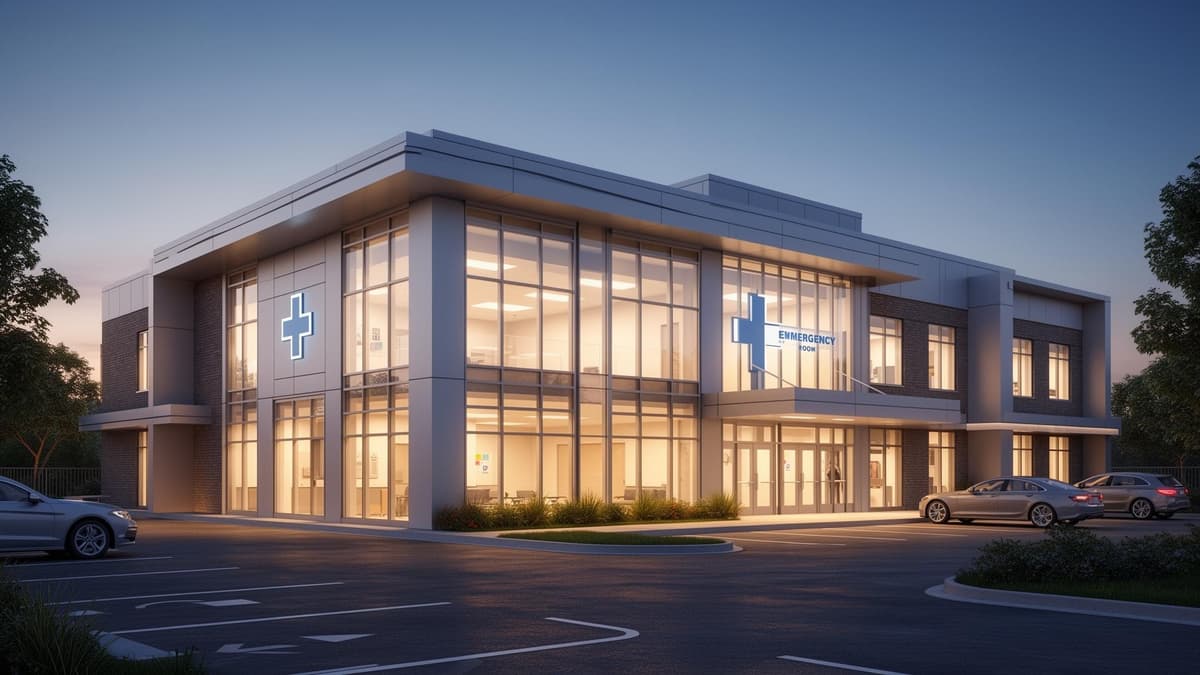

Due Diligence Checklist for Freestanding ER Investors
Investing in freestanding emergency rooms offers compelling returns, but the asset class demands a level of due diligence that goes well beyond traditional real-estate underwriting. FSER investments combine real-estate fundamentals with healthcare operations, clinical quality considerations, regulatory compliance, and complex revenue dynamics. Investors who approach due diligence with the right framework — thorough, systematic, and informed by sector-specific expertise — significantly reduce their risk of capital loss while positioning themselves to capture the full return potential of the opportunity.
This article provides a practical, step-by-step due diligence checklist for investors evaluating freestanding ER opportunities. Whether you are reviewing a single-facility acquisition, a development partnership, or a portfolio investment, this framework covers the critical dimensions that separate high-quality opportunities from problematic ones.
Phase 1: Market Validation
Market quality is the single most important determinant of FSER financial performance. A well-operated facility in a weak market will underperform a merely competent facility in a strong market. Market due diligence should be exhaustive.
Population and Demographics
- Trade-area population: Assess the total population within a 5-mile and 10-mile radius. Strong FSER trade areas typically have 50,000+ residents within 5 miles.
- Growth trajectory: Review population growth over the past 5 years and projected growth for the next 5-10 years. Fast-growing suburban corridors present the strongest opportunities.
- Age and household composition: Families with children and working-age adults drive emergency department demand. Evaluate the trade area's age distribution and household-composition data.
- Median household income: Higher incomes correlate with commercial insurance coverage. Trade areas with median household incomes above $75,000 generally offer favourable payer mixes.
Competitive Analysis
- Competitor inventory: Map all existing ERs — hospital-based, hospital-affiliated freestanding, and independent freestanding — within the trade area. Assess each competitor's capacity, quality, wait times, and payer participation.
- Drive-time analysis: Determine the nearest ER alternative from the subject facility's location. Trade areas where the nearest competitor is 10+ minutes away by car offer the strongest positioning.
- Planned competition: Research pending applications for new ER facilities, hospital system expansion plans, and announced development projects that could add competitive capacity.
Healthcare Access Gaps
- Hospital ER wait times: Review CMS Hospital Compare data and state-level reporting for wait times at nearby hospital emergency departments. Markets with average wait times exceeding three hours indicate significant access gaps.
- Ambulance diversion frequency: Track how often nearby hospital ERs go on ambulance diversion. Frequent diversions signal chronic overcapacity and unmet demand.
Phase 2: Operator Evaluation
In healthcare infrastructure, operator quality is paramount. Unlike traditional real estate where property management is largely commoditised, FSER operations require specialised clinical, regulatory, and financial expertise. Operator due diligence is non-negotiable.
Track Record and Experience
- Operating history: How many FSERs has the operator opened and managed? What is their track record of facility performance? Review historical financial data for existing facilities.
- Clinical outcomes: Request data on patient outcomes, satisfaction scores, and quality metrics. Enquire about adverse-event history and any regulatory actions.
- Leadership team: Evaluate the experience and qualifications of the operator's leadership — clinical director, operations team, and financial management. Healthcare infrastructure rewards experienced operators disproportionately.
Focus Health's portfolio track record demonstrates the type of operating history and performance data that investors should expect from credible operators.
Operational Infrastructure
- Revenue-cycle management: How does the operator handle billing, coding, collections, and payer-contract negotiations? Evaluate in-house vs. outsourced RCM and assess historical collection rates.
- Clinical staffing model: Review the physician and nursing staffing model. Are physicians board-certified in emergency medicine? What are retention rates? How are shifts scheduled and covered?
- Compliance programme: Request documentation of the operator's compliance programme — HIPAA, OSHA, CLIA, DEA, and state licensing protocols. A robust compliance infrastructure protects both patients and investors.
Phase 3: Financial Model Review
FSER financial models are more complex than traditional real-estate pro-formas. Investors should understand — and stress-test — every assumption in the model.
Revenue Assumptions
- Patient volume projections: Review monthly volume ramp assumptions from opening through stabilisation. Compare projections to comparable facilities in similar markets. Be sceptical of aggressive ramp timelines — most FSERs require 6-12 months to reach stabilised volumes.
- Payer-mix assumptions: Evaluate the projected distribution of commercial, Medicare, Medicaid, and self-pay patients. Cross-reference with trade-area demographic data. Commercial percentage should align with the area's employer-sponsored insurance rates.
- Revenue per visit: Assess average revenue per visit by payer category. Compare to industry benchmarks. Be cautious of models that assume unusually high commercial reimbursement or low self-pay bad debt.
Cost Structure
- Physician and staffing costs: Typically 35-45 per cent of revenue. Verify that compensation assumptions align with local market rates and are competitive enough to attract and retain quality clinicians.
- Facility and equipment costs: Review lease terms, equipment maintenance contracts, and supply costs. Ensure capital-expenditure reserves are adequate for equipment replacement and facility upkeep.
- Revenue-cycle costs: Billing and collections typically run 7–12 per cent of gross revenue. In-house operations tend to cost less but require capable management.
Sensitivity Analysis
- Model downside scenarios: What happens if volumes reach only 70 per cent of projection? If commercial payer mix is 5 percentage points lower than assumed? If a major payer terminates the network contract?
- Identify breakeven thresholds: At what patient volume and payer mix does the facility break even? How much margin of safety exists between projected and breakeven performance?
Our investor checklist for healthcare operators provides additional financial evaluation guidance tailored to FSER investments.
Phase 4: Legal and Regulatory Due Diligence
Healthcare is one of the most heavily regulated industries in the United States. Legal and regulatory due diligence must be thorough.
Licensing and Certifications
- State licensure: Verify that the facility holds (or will obtain) a valid freestanding ER licence from the state health department. Review licence status, renewal dates, and any deficiency history.
- CLIA certification: Confirm that the on-site laboratory holds a valid CLIA certificate appropriate for the scope of testing performed.
- DEA registration: Verify current DEA registration for controlled-substance prescribing and storage.
- Radiation machine registration: Confirm compliance with state radiation-control requirements for CT, X-ray, and fluoroscopy equipment.
Payer Contracts and Compliance
- In-network contracts: Review the status of contracts with major commercial payers. In-network participation is essential for volume and reimbursement predictability, particularly in the wake of balance-billing reform.
- Compliance with No Surprises Act: Verify that the facility has systems in place to comply with federal balance-billing protections, including good-faith estimates and independent dispute resolution processes.
- EMTALA compliance: Confirm that the facility maintains EMTALA compliance protocols — medical screening examinations and stabilisation for all patients regardless of ability to pay.
Corporate Structure and Governance
- Review the legal entity structure: operating company, real-estate holding entity, management agreements, and investor participation vehicles.
- Evaluate governance documents: operating agreements, management contracts, reporting obligations, and investor rights.
- Assess insurance coverage: professional liability, general liability, property, and directors & officers coverage.
Phase 5: Clinical Quality Assessment
Clinical quality protects patients, reduces liability exposure, and drives long-term financial performance. Investors should evaluate clinical quality with the same rigour applied to financial modelling.
- Physician credentialling: Verify that all emergency physicians are board-certified or board-eligible in emergency medicine, with clean licensure and malpractice histories.
- Quality assurance programme: Review the facility's QA programme — chart reviews, peer review, patient-satisfaction tracking, and clinical-outcome monitoring.
- Patient feedback: Review patient-satisfaction data, online reviews, and complaint-resolution processes. Consistent negative feedback signals operational problems that will eventually affect volume and revenue.
- Clinical protocols: Evaluate whether the facility uses evidence-based clinical protocols for common emergency presentations — chest pain, stroke, paediatric emergencies, trauma.
Phase 6: Exit Strategy Analysis
Every investment requires a credible exit strategy. FSER investments offer multiple potential exit pathways, and investors should understand each one before committing capital.
- Hospital system acquisition: Hospital systems frequently acquire high-performing FSERs to expand their emergency department networks. A well-positioned facility with strong volume, clean licensure, and quality metrics is an attractive acquisition target.
- Operator consolidation: Multi-site FSER operators may acquire individual facilities to build scale. This pathway rewards facilities with strong operating performance and clean books.
- Portfolio sale: Investors with multiple FSER assets can pursue portfolio-level transactions that command premium valuations due to scale and diversification.
- Recapitalisation: Returning investor capital through refinancing — leveraging stabilised cash flows to secure debt financing — allows investors to recoup principal while maintaining equity participation in ongoing operations.
- Ongoing cash distributions: Some investors prefer to hold stabilised FSER assets indefinitely, collecting quarterly cash distributions rather than pursuing a liquidity event. FSER cash-flow profiles support this approach.
Review the Focus Health partnership models to understand how exit flexibility is built into our investment structures.
Bringing It All Together
Due diligence for freestanding ER investments is multidimensional — spanning market analysis, operator evaluation, financial modelling, legal review, clinical quality assessment, and exit planning. Investors who approach each dimension systematically and with appropriate expertise will identify the strongest opportunities and avoid the most common pitfalls.
The most important single piece of advice: invest with an experienced operator. FSER returns are driven by operational execution — recruiting great physicians, managing payer relationships, maintaining clinical quality, and optimising revenue cycles. No amount of financial modelling can substitute for a team that knows how to open, staff, and operate a high-quality emergency facility. The operator is the investment.
Ready to Evaluate FSER Investment Opportunities?
Visit our investor resources or contact our team to learn how Focus Health structures transparent, high-quality healthcare infrastructure investments.