
From Site Selection to Grand Opening: A Focus Health Case Study
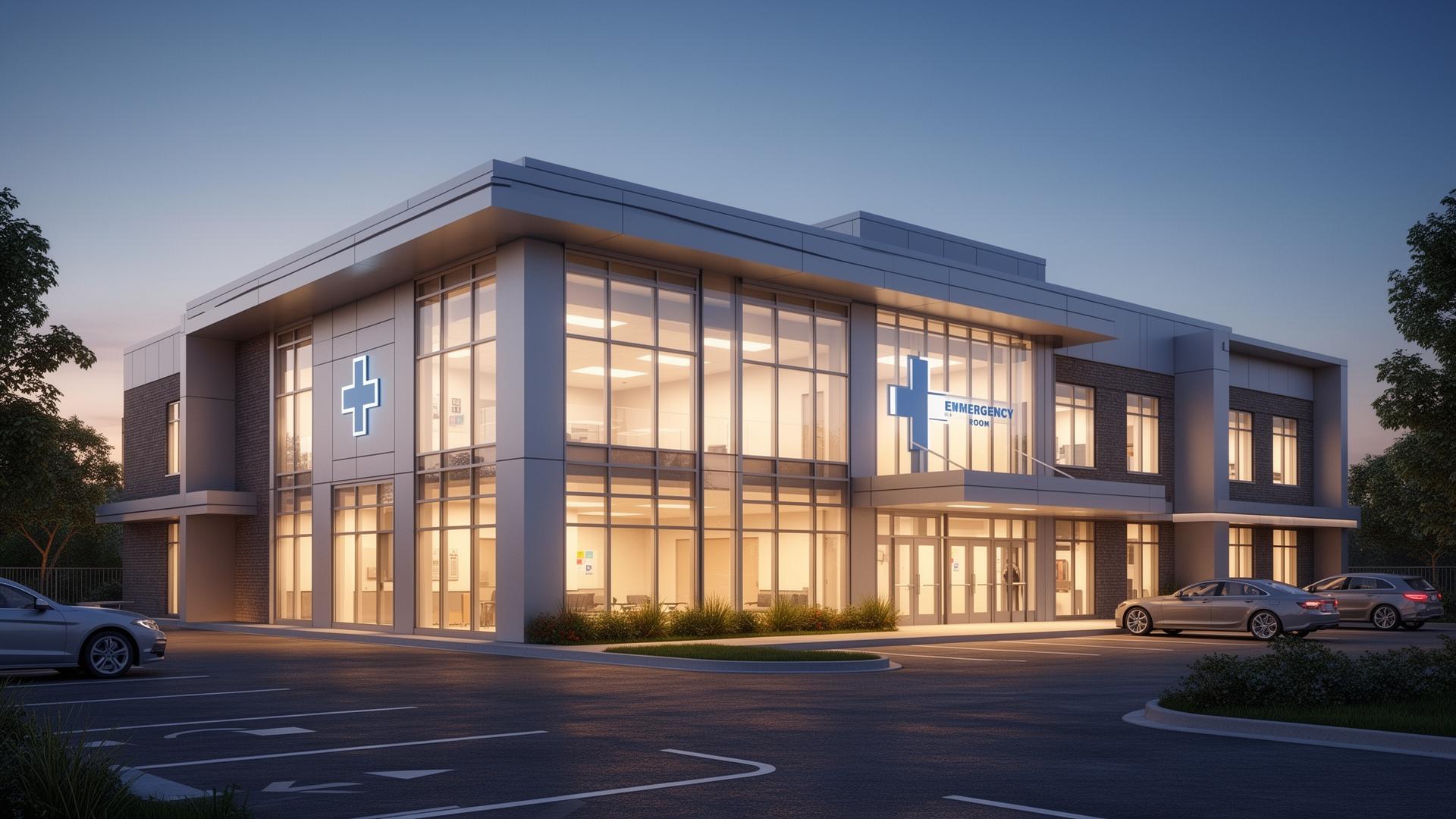
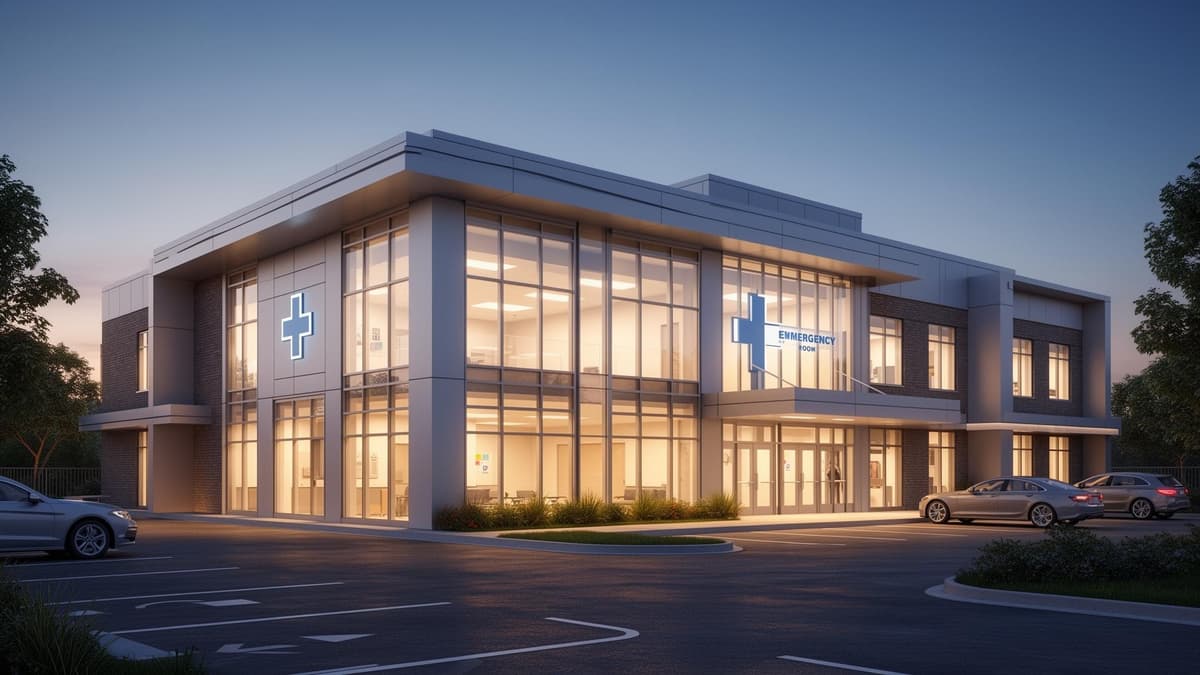
Developing a freestanding emergency room from scratch is one of the most complex undertakings in healthcare infrastructure. It demands the convergence of real-estate strategy, regulatory expertise, clinical workforce planning, capital structuring, and community engagement—all executed against a compressed timeline where delays translate directly into lost revenue and eroded investor confidence. This freestanding ER development case study walks through the full lifecycle of a Focus Health facility, using the ER of Lufkin as the reference project, and examines the decisions, milestones, and lessons that shaped its journey from a market thesis to a fully operational emergency room serving its community.
Every facility Focus Health delivers follows the same disciplined framework, but each project surfaces unique challenges that test and refine the model. The ER build timeline described here is representative of the broader Focus Health playbook while reflecting the specific dynamics of a growing East Texas corridor.
Phase 1: Market Research and Site Selection
The development lifecycle begins long before any construction activity. Focus Health’s market evaluation framework applies a multi-layered analytical process to identify corridors where freestanding emergency care is both clinically needed and economically viable.
For the ER of Lufkin, the initial market screen flagged Angelina County as a high-potential corridor based on several converging factors. The county’s population of approximately 88,000 residents was served by a single hospital emergency department, creating significant access constraints during peak hours. Drive-time analysis revealed that large residential pockets sat more than 20 minutes from the nearest emergency care, well above the 10-minute threshold that correlates with improved outcomes for time-sensitive conditions such as chest pain, stroke, and traumatic injury.
Payer-mix modelling indicated a favourable insurance demographic: employer-sponsored commercial coverage rates in the Lufkin trade area exceeded the East Texas average, driven by the timber, manufacturing, and healthcare-services employment base. Self-pay rates were moderate, and Medicaid penetration was within acceptable thresholds for strong blended revenue per visit.
Site selection focused on visibility, accessibility, and traffic patterns. The team evaluated over a dozen candidate parcels before identifying the final site—a high-traffic commercial corridor with strong ingress and egress, ample signage opportunity, and proximity to the population centre of gravity. The lease was negotiated with performance-based escalators that aligned landlord and operator incentives during the ramp-up period.
This phase consumed approximately 60–90 days, though the analytical groundwork had been laid months earlier through Focus Health’s ongoing pipeline development process.
Phase 2: Financial Structuring and Capital Raise
With the market thesis validated and the site identified, the project moved into financial structuring. Focus Health’s Build-Fund-Operate platform provides a repeatable capital-formation framework that aligns investor participation with project milestones.
The ER of Lufkin capital structure was designed around a blended equity–debt model. Equity commitments were secured from a combination of institutional and accredited individual investors who participated in the Focus Health fund vehicle. Debt financing was arranged through a healthcare-focused lender familiar with FSER economics, with terms structured around projected patient-volume ramp curves and break-even timelines.
The financial model incorporated conservative assumptions: a 90-day construction timeline, a 6-month ramp to break-even patient volumes, and a 12-month target for stabilised operations. Revenue projections were stress-tested across multiple payer-mix scenarios, and downside cases assumed slower-than-expected volume ramp and higher self-pay penetration than the base case.
Key to the capital raise was transparency. Investor materials included granular market data, competitive-landscape mapping, detailed construction budgets, and operating-expense projections built from Focus Health’s existing facility benchmarks. This data-driven approach—refined across prior projects in the Focus Health portfolio—gave capital partners confidence in underwriting assumptions and management capability.
The capital-raise phase ran concurrently with the final stages of site selection and lease negotiation, compressing the overall pre-construction timeline to approximately 90 days from initial market screen to construction commencement.
Phase 3: Design, Permitting, and Construction
Focus Health utilises a standardised facility design that has been refined across multiple builds. The floor plan is purpose-engineered for emergency medicine workflow: a central nurse station with direct sightlines to all treatment bays, dedicated trauma and resuscitation rooms, an on-site CT suite, digital X-ray, point-of-care ultrasound, and a CLIA-moderate in-house laboratory. The design prioritises patient throughput, clinical safety, and diagnostic capability within a footprint that is economically efficient to construct and operate.
For the ER of Lufkin, the design was adapted to site-specific conditions—lot geometry, utility access, and local building-code requirements—while maintaining the core layout standards that ensure operational consistency across the Focus Health network. Architectural and engineering drawings were completed in parallel with permit applications to compress the pre-construction timeline.
Permitting involved coordination with Angelina County and the City of Lufkin, including building permits, fire-safety approvals, and utility-connection agreements. Focus Health’s development team maintains a permitting playbook for Texas municipalities that anticipates common requirements and documentation standards, reducing the risk of delays caused by incomplete or non-conforming submissions.
Construction was managed by a general contractor with prior FSER build experience. The ER build timeline from ground-breaking to substantial completion was 95 days—slightly above the 90-day target due to a two-week weather delay during the foundation pour. Weekly progress reporting kept investors and stakeholders informed, and a dedicated Focus Health project manager was on site for critical milestones including concrete pour, steel erection, mechanical rough-in, and equipment installation.
Equipment procurement—CT scanner, X-ray system, ultrasound units, laboratory analysers, cardiac monitors, and IT infrastructure—was initiated during the design phase to ensure delivery aligned with the construction schedule. Long-lead items such as the CT scanner were ordered 60 days before anticipated installation to mitigate supply-chain risk.
Phase 4: Licensing, Credentialling, and Staffing
Parallel to the final months of construction, the licensing and credentialling workstream moved into full execution. This healthcare facility case study would be incomplete without emphasising the complexity of this phase—it is often the most underestimated segment of the development timeline.
Texas Department of State Health Services (DSHS) licensure for a freestanding emergency medical care facility requires a comprehensive application that includes facility plans, equipment inventories, staffing models, clinical protocols, and evidence of compliance with Texas Health and Safety Code Chapter 254. Focus Health’s regulatory team submitted the application 60 days before the projected completion date, allowing time for DSHS review, site inspection, and any required remediation.
Credentialling with commercial insurance payers—Blue Cross Blue Shield of Texas, UnitedHealthcare, Aetna, Cigna, and regional plans—was initiated simultaneously. Payer credentialling timelines vary from 30 to 120 days depending on the insurer, and delays in this process can create a revenue gap between facility opening and payer-contract activation. Focus Health mitigates this risk by initiating payer applications as early as possible in the development cycle and maintaining relationships with payer-contracting representatives across Texas.
Physician recruitment targeted board-certified emergency medicine physicians with experience in freestanding ER settings. The medical director was engaged early in the development process to participate in clinical protocol development, equipment selection, and staff training. Nursing, radiology technologist, and laboratory technician recruitment followed, with hiring timelines calibrated to allow four weeks of pre-opening training and orientation.
The pre-opening training programme included clinical simulations, EHR workflow training, emergency-code drills, and customer-experience standards. Every staff member completed a structured orientation that covered Focus Health’s clinical protocols, documentation standards, and patient-communication expectations. The Focus Health development process treats staffing and training as mission-critical deliverables, not afterthoughts.
Phase 5: Grand Opening and Community Launch
The grand opening of the ER of Lufkin marked the transition from development to operations—a milestone that required its own dedicated planning and execution.
Community-launch activities began 30 days before opening with a multi-channel awareness campaign. Local digital advertising, social media outreach, direct mail to surrounding residential areas, and partnerships with local businesses and civic organisations built awareness and positioned the facility as a trusted healthcare resource for the Lufkin community.
A ribbon-cutting ceremony hosted local officials, community leaders, and healthcare professionals, providing media coverage and establishing the facility’s civic presence. Facility tours gave community members an opportunity to see the treatment environment, meet the clinical team, and understand the scope of emergency services available.
From an operational standpoint, the first 30 days after opening represent a critical calibration period. Patient volumes start low—typically 5–10 patients per day in the first week—and ramp gradually as community awareness builds. During this period, the operations team fine-tunes workflows, adjusts staffing schedules to match emerging volume patterns, and resolves any equipment or process issues that surface in live clinical operations.
The ER of Lufkin reached its 30-day volume target within the first month and achieved break-even patient volumes ahead of the projected 6-month timeline. Post-launch patient satisfaction scores exceeded internal benchmarks, validating the investment in pre-opening training and facility design.
Lessons Learned and Continuous Improvement
Every Focus Health project generates operational intelligence that feeds back into the development playbook. The ER of Lufkin case study surfaced several key lessons:
- Weather contingency planning: The two-week construction delay underscored the importance of building weather buffers into ER build timelines, particularly for projects with foundation work scheduled during East Texas rainy seasons. Subsequent projects now include a 10-day weather contingency in the base schedule.
- Payer credentialling acceleration: Initiating payer applications 90 days before projected opening—rather than 60—reduced the revenue gap between facility opening and full payer-contract activation. This adjustment has become standard across all new Focus Health developments.
- Community engagement depth: The facilities that launch with the strongest patient-volume trajectories are those that invest most heavily in pre-opening community engagement. The Lufkin launch demonstrated that local employer partnerships and civic-leader endorsements accelerate community trust-building meaningfully beyond what digital advertising alone can achieve.
- Equipment commissioning overlap: Scheduling equipment commissioning and testing to overlap with the final two weeks of construction—rather than sequentially after substantial completion—compressed the pre-opening timeline by approximately 10 days without compromising quality or safety.
These insights are codified into Focus Health’s operating procedures and shared across the development, clinical, and operations teams. The result is a development platform that improves with each successive project, delivering faster timelines, lower risk, and more predictable outcomes for investors and communities alike.
Explore Focus Health’s Development Platform
Learn how our Build-Fund-Operate model delivers healthcare facilities from concept to community impact, or review the full portfolio to see our track record in action.