
Austin–San Antonio Healthcare Corridor: Emerging Opportunities Along I-35
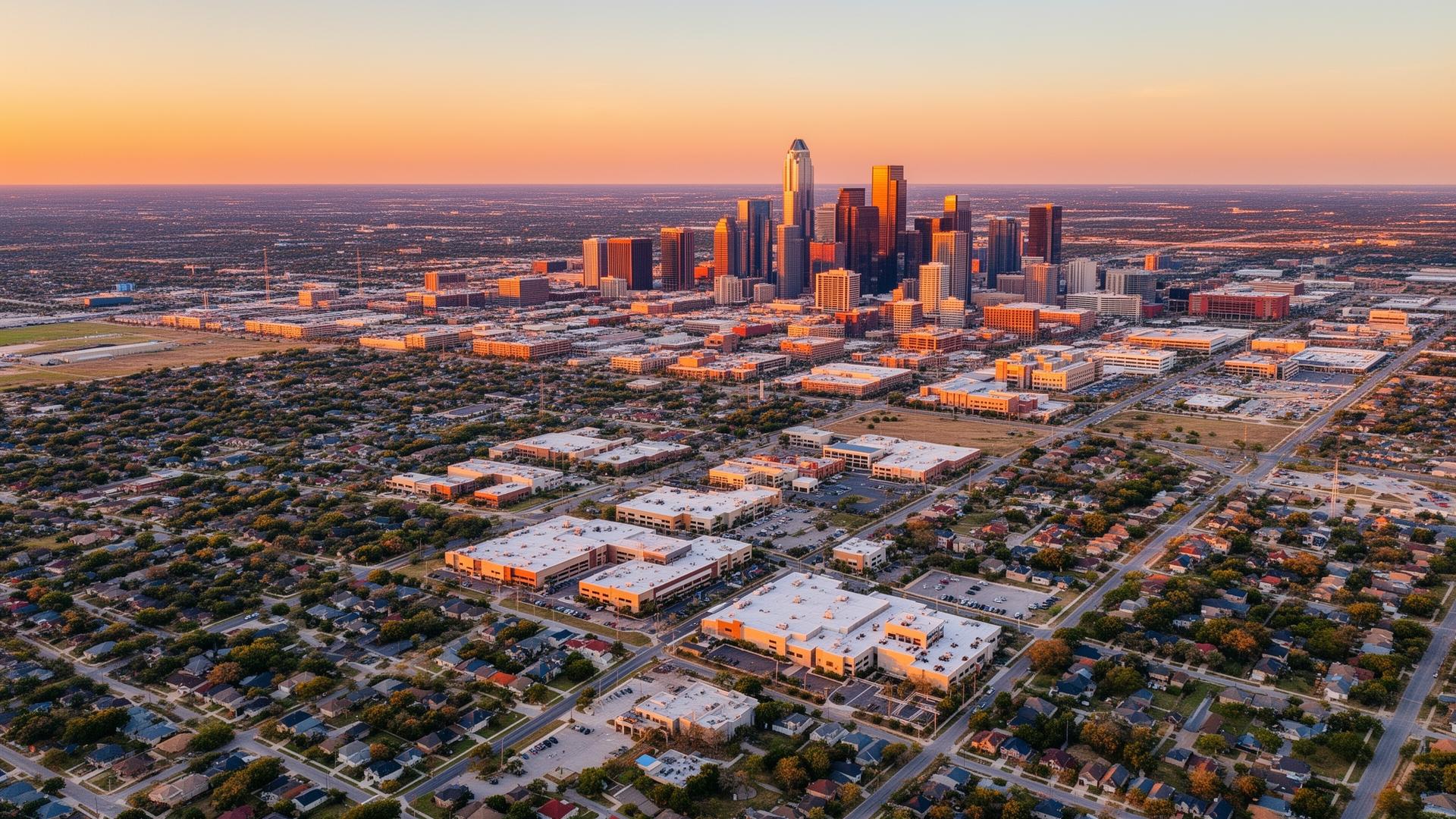
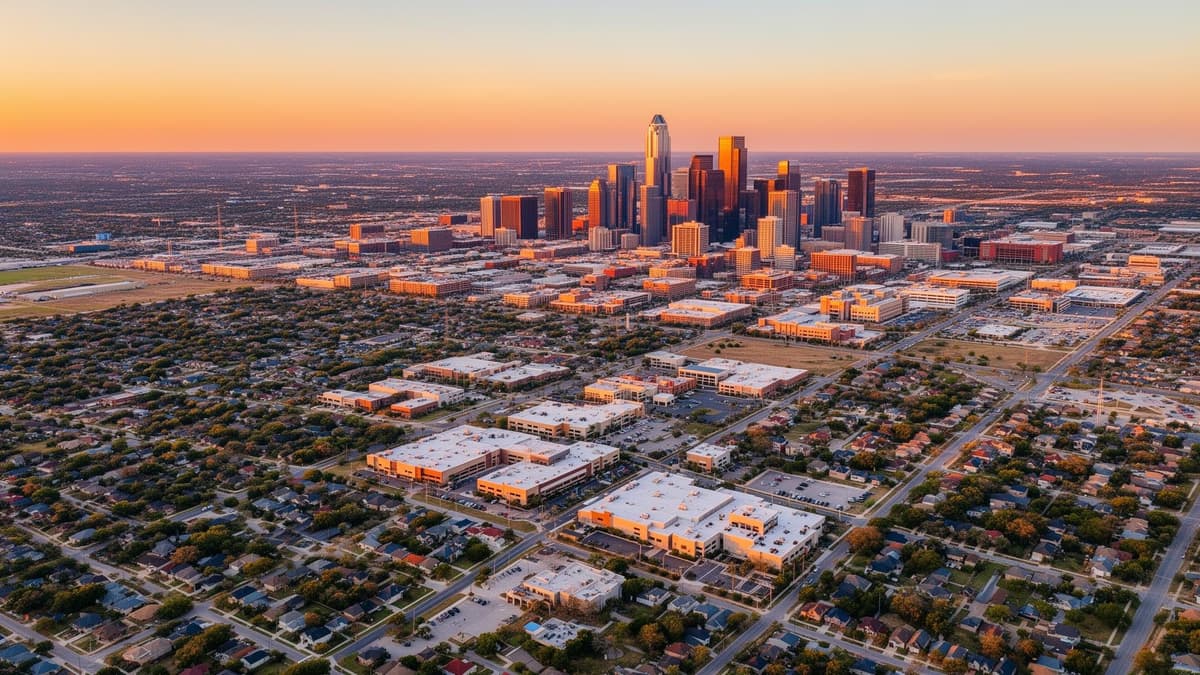
The 80-mile stretch of Interstate 35 between Austin and San Antonio is rapidly becoming one of the most important healthcare infrastructure corridors in the American South. Fuelled by technology-sector migration, corporate relocations, and a sustained influx of residents from higher-cost markets, the I-35 corridor is experiencing population growth that outpaces nearly every comparable region in the country. For healthcare operators and investors, this corridor represents a compelling early-mover opportunity — the kind of structural demand environment that rewards disciplined development with durable, long-term returns.
The Growth Engine: Technology, Migration, and Affordability
Austin has transformed from a mid-sized state capital into one of the premier technology hubs in North America. The arrival of Tesla's Gigafactory in southeast Travis County, Samsung's $17 billion semiconductor facility in Taylor, and Oracle's global headquarters relocation have reshaped the region's economic base. Apple, Google, Meta, Amazon, and dozens of high-growth startups maintain substantial Austin operations. The resulting job creation has driven housing demand, household formation, and population growth at a pace that few metros can match.
Between 2020 and 2025, the Austin–Round Rock–Georgetown metropolitan area grew by approximately 25 per cent — one of the fastest rates among the 50 largest U.S. metros. San Antonio, already a metro of 2.6 million, added roughly 50,000 residents per year over the same period. Crucially, the cities between them — New Braunfels, San Marcos, Kyle, Buda, and Georgetown — are growing even faster in percentage terms.
New Braunfels was named the fastest-growing city in the United States among municipalities with 50,000 or more residents in multiple recent years. Georgetown and Kyle have experienced similar trajectories. These are not bedroom communities in the traditional sense — they are becoming self-sustaining economic centres with retail, commercial, and increasingly, healthcare infrastructure of their own.
Healthcare Access Gaps: Demand Outpacing Supply
Austin's healthcare system is anchored by Ascension Seton, St. David's (HCA), and Baylor Scott & White, while San Antonio's major systems include University Health, Baptist Health, and Methodist Healthcare. Both metros have strong hospital infrastructure within their urban cores. However, the communities between and around them — the I-35 corridor's fastest-growing areas — face significant healthcare access challenges.
Consider the healthcare landscape for a family moving into a new master-planned community in Hutto, Leander, or Liberty Hill north of Austin. The nearest hospital emergency department may be a 20–30 minute drive away, and upon arrival, they face wait times of three to five hours. The same dynamic plays out in communities south of Austin — Buda, Kyle, San Marcos — where residential rooftops are being added far faster than healthcare capacity.
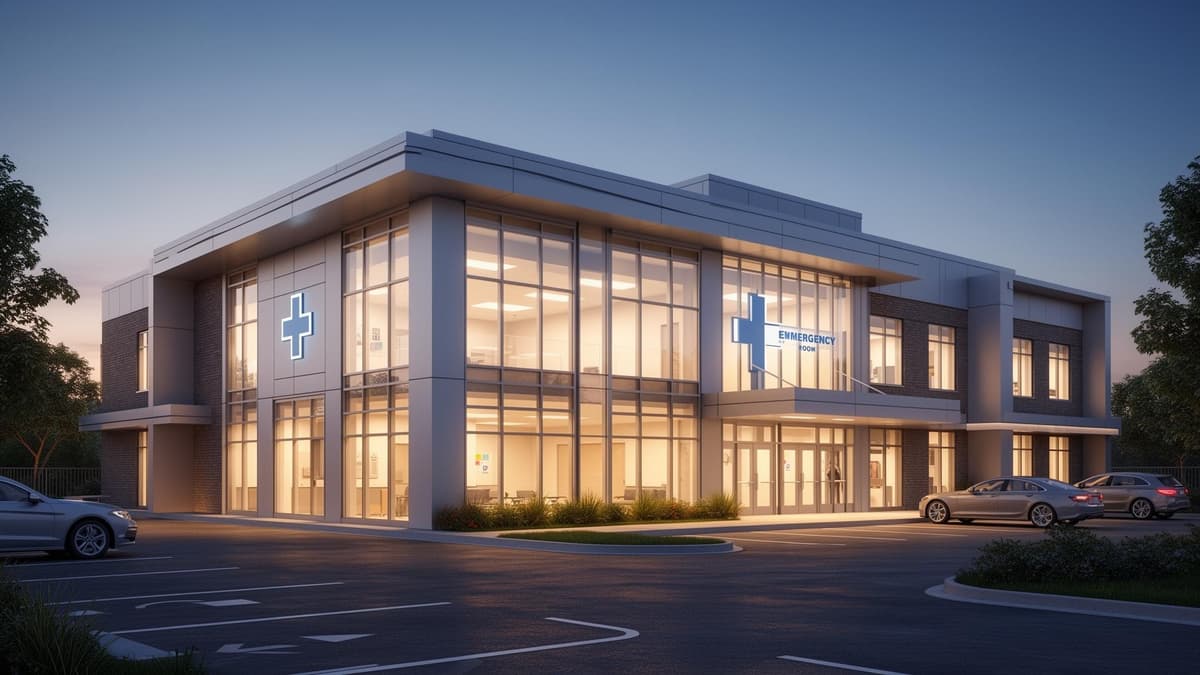
Freestanding emergency rooms address this gap directly. A well-placed FSER provides 24/7, board-certified emergency care with average wait times under ten minutes, on-site CT, X-ray, and laboratory services, and a patient experience calibrated for speed and quality. Our market evaluation playbook identifies these high-growth, underserved corridors as prime development targets.
Corridor-by-Corridor Analysis
North Austin and Williamson County
Williamson County has emerged as one of the fastest-growing counties in Texas. Georgetown, the county seat, has doubled in population over the past decade. Round Rock, Cedar Park, Leander, and Liberty Hill are experiencing similar growth. The Samsung facility in Taylor will add thousands of construction jobs and permanent positions, further accelerating the eastern Williamson County corridor.
Healthcare infrastructure in Williamson County has not kept pace. While St. David's Round Rock and Baylor Scott & White in Round Rock provide hospital-based emergency care, the northern reaches of the county — Georgetown north, Jarrell, Florence — remain underserved. Freestanding ER opportunities exist along the I-35 corridor from Georgetown north, along SH-130, and in emerging communities west of I-35 including Leander and Liberty Hill.
South Austin and Hays County
Hays County mirrors Williamson County's growth trajectory with even fewer existing healthcare resources. Kyle and Buda have grown rapidly as families seek affordable housing with commuting access to Austin's employment centres. San Marcos, home to Texas State University, adds a permanent student population of nearly 40,000 to the mix. Dripping Springs, west of I-35, is another fast-growing community with limited healthcare infrastructure.
Hospital emergency department access in Hays County remains limited. Ascension Seton Hays in Kyle is the primary hospital-based option, and it is frequently at or near capacity. The I-35 South corridor from Buda through San Marcos presents multiple viable FSER trade areas with strong demographics and limited competition.
New Braunfels and the Central Corridor
New Braunfels sits at the midpoint of the I-35 corridor and has become a destination market in its own right. The city's population has grown from approximately 57,000 in 2010 to over 115,000 today, with projections suggesting 150,000 or more by 2030. Master-planned communities including Vintage Oaks, Veramendi, and Mission del Lago continue to add rooftops at substantial rates.
Healthcare access in New Braunfels has improved with the expansion of Resolute Health Hospital, but the pace of residential growth continues to outstrip capacity. Freestanding ER opportunities exist in northern New Braunfels along I-35, in the FM 306/Canyon Lake corridor, and in communities along SH-46 toward Seguin.
North San Antonio and Comal County
San Antonio's northern expansion — into Schertz, Cibolo, Selma, and Garden Ridge — creates demand that bridges into the I-35 corridor market. These communities sit between San Antonio's hospital infrastructure and the emerging I-35 mid-corridor, making them attractive for FSER development that can serve residents who find existing hospital ERs too distant or too crowded.
Master-Planned Community Boom
The I-35 corridor is experiencing a master-planned community boom that rivals DFW's northern suburbs. Major developments under construction or in planning include thousands of residential lots in communities across Williamson, Hays, and Comal counties. Each of these developments creates a concentrated pocket of demand for healthcare services — families with children, dual-income households with commercial insurance, and expectations for convenient, high-quality emergency care nearby.
The pattern is consistent: developers build rooftops, retail follows, and healthcare infrastructure arrives last. Operators who identify these demand pockets early and secure sites before competition intensifies can capture significant first-mover advantage. Focus Health's Build-Fund-Operate platform is designed to move quickly in exactly these windows of opportunity.
Competitive Landscape
The I-35 corridor's FSER competitive landscape is notably less dense than DFW or Houston. While Austin proper hosts a growing number of freestanding ERs and hospital-affiliated freestanding emergency departments, the mid-corridor communities — Kyle, Buda, San Marcos, New Braunfels — have far fewer options. This relative scarcity presents a significant white-space opportunity for operators who can identify the right sites and execute with speed.
Key competitive considerations include:
- Hospital system FSEDs: St. David's and Ascension Seton have expanded their freestanding emergency department networks in the Austin metro, primarily serving established suburban areas. Their presence in mid-corridor communities remains limited.
- Independent FSERs: A small number of independent operators have established facilities in the corridor, but total capacity remains well below demand in most trade areas.
- Urgent care overlap: The corridor hosts a growing number of urgent care centres, which serve low-acuity needs but do not replace freestanding ER capacity for true emergencies requiring CT, X-ray, lab, and board-certified emergency physician assessment.
Payer Mix and Economic Considerations
The I-35 corridor's payer mix is increasingly favourable for FSER development. Tech-sector employment in Austin drives strong commercial insurance penetration, and much of the corridor's new residential growth is driven by households relocating from Austin proper — bringing their employer-sponsored insurance with them. Median household incomes in Georgetown, Round Rock, and many New Braunfels master-planned communities comfortably exceed $90,000.
The corridor also benefits from a lower cost of real estate compared to DFW's premium suburban markets, which translates to lower site-acquisition costs and improved development economics. Combined with favourable payer mix and strong volume potential, the I-35 corridor offers attractive per-facility investment returns.
Infrastructure and Accessibility
I-35 itself is undergoing a massive expansion project — the Texas Department of Transportation's I-35 Capital Express programme — which will improve traffic flow and accessibility throughout the corridor. SH-130, the toll road running parallel to I-35 on the east, provides additional connectivity and has spurred development in communities along its route. These infrastructure investments reinforce the corridor's long-term growth trajectory and improve drive-time accessibility for healthcare facilities.
Strategic Outlook
The Austin–San Antonio I-35 corridor represents one of the most compelling emerging markets for FSER development in the United States. Population growth is structural and sustained, healthcare access gaps are widening, competitive density is low relative to demand, and payer-mix dynamics are increasingly favourable. Operators who establish presence in this corridor within the next two to three years will benefit from first-mover positioning in communities that are projected to grow for decades.
Focus Health's market intelligence and development capabilities position us to execute in this corridor with the same discipline and speed that we have demonstrated in DFW. Our evaluation of the I-35 corridor is ongoing, and we are actively identifying sites that meet our criteria for trade-area demographics, accessibility, visibility, and competitive positioning.
Explore Expansion Opportunities with Focus Health
Learn more about our partnership models or review our market evaluation approach to understand how we identify and develop high-growth corridors.